
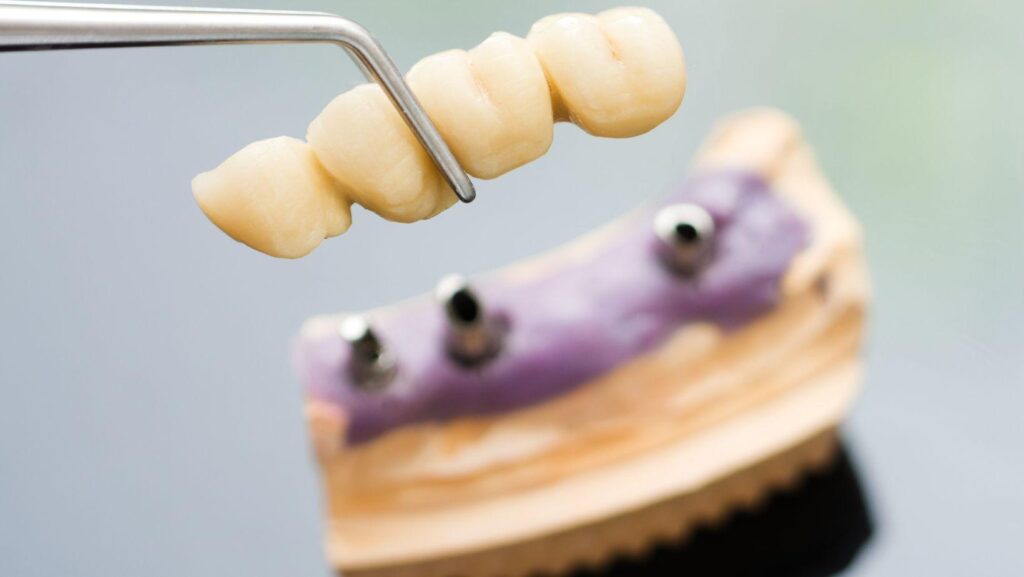
If you're stuck between a single implant crown and a full denture, implant-supported bridges might hit that sweet spot. They restore several missing teeth with fewer implants and don't mess with healthy neighbors.
An implant-supported bridge uses titanium posts anchored in your jaw to hold a fixed prosthesis that looks and works much like natural teeth. You get stability and bone preservation that removable dentures just can't offer.
Let's dig into how these bridges work, why they often outshine traditional dental bridges and dentures for bigger gaps, who makes a good candidate, and what you can expect over the long haul. Hopefully, that'll help you figure out if this solution matches your mouth, lifestyle, and budget.
How Implant Bridges Work
We’ll cover what materials make up an implant bridge, how the implants go in, and the main design choices that impact function, price, and upkeep.
Key Components and Materials
An implant bridge has three main parts: the implants (titanium or titanium alloy posts), abutments (connectors), and the prosthetic pontics (the visible teeth).
Implants fuse directly to your jawbone, creating a stable base that mimics natural roots. Abutments attach to the implants and provide a platform for the bridge.
Pontics come in materials like porcelain-fused-to-metal (PFM), all-ceramic (zirconia or lithium disilicate), or acrylic for temporary use.
Zirconia is strong and looks real, while PFM can be more affordable for back teeth. The material you choose affects durability, appearance, and the risk of chipping.
You’ll also see screw-retained versus cemented bridges; each type uses different abutments and affects how easy it is to remove or maintain the bridge.
It’s worth talking with your dentist about materials to balance looks, function, and long-term risks.
Implant Placement Process
Your dentist will check your bone volume and quality with CBCT scans and a clinical exam to plan how many implants you need and where.
If you don’t have enough bone, you might need grafting or a sinus lift first, which can add several months.
During surgery, the dentist places the titanium implants into your jaw with local anesthesia—sometimes with sedation if you want it.
Healing caps cover the implants while the bone fuses to them, which usually takes 3–6 months depending on where they’re placed and your bone quality.
Once the bone’s healed, the dentist exposes the implants (if they were covered) and attaches abutments.
They’ll take impressions or digital scans for the bridge, and you might wear a temporary bridge while the lab makes the final one.
Fitting the final bridge involves screwing or cementing it in and checking your bite and fit.
You’ll come back for follow-ups to make sure your gums are happy, your bite’s right, and you can keep things clean.
Good home care and regular professional cleanings help keep implants healthy and make the bridge last longer.
Design Variations
You can get a fixed (non-removable) implant bridge or a removable overdenture-style bridge that clips onto implant bars.
Fixed bridges feel and work most like real teeth and don’t need daily handling, but they tend to cost more.
The number of implants and the length of the bridge vary.
A three-unit bridge might use two implants for one pontic, while longer spans may need more implants or clever placement with cantilevers.
Cantilevers let you use fewer implants but can add stress, so dentists only use them in specific cases.
Retention methods include screw-retained designs for easy removal and cement-retained designs for better looks, though those can be harder to retrieve.
Your dentist will weigh your bite, appearance, maintenance needs, and how easy it is to fix things down the line before picking the best design.
Benefits Over Traditional Dental Options
Implant-supported bridges help preserve jawbone, protect neighboring teeth, and reliably restore chewing force.
You get a long-lasting, low-maintenance fix that often means fewer oral health problems and lower costs over time.
Comparison With Crowns
If you’ve lost one or more teeth, a crown on a nearby tooth can fill the space but usually means shaving down a healthy tooth.
With an implant-supported bridge, you skip that step because the implants take the load instead of your natural crowns.
Implant-supported bridges send biting forces into the jaw through the implants, which keeps the bone from shrinking.
Crowns on natural teeth don’t do this, so the bone underneath can fade away.
Implant-supported bridges usually last longer than a multi-unit crown solution for missing teeth.
You’ll still need to brush, floss, and see your dentist, but implants lower the risk of decay or root canals on neighboring teeth since those teeth stay untouched.
Advantages Compared to Dentures
Removable dentures rest on your gums and need suction or glue; implant-supported bridges are fixed and feel more like real teeth.
They’re more stable for biting and talking, and you’ll probably have fewer sore spots or food restrictions.
Implants stop the bone loss that speeds up with dentures, so your facial shape and future prosthetic fit hold up better.
Day-to-day care is simpler—you brush and floss around the bridge and implants instead of taking out and soaking a denture every night.
Implant-supported bridges let you chew with more force and eat a wider variety of foods than most dentures.
That means you’re less likely to have nutritional issues from avoiding certain foods.
Suitability for Different Patients
If you have one or more missing teeth in a row and enough jawbone, an implant-supported bridge could be a solid choice.
It’s best for people who want long-term stability, don’t want to touch healthy teeth, and can handle surgery and healing.
If you’ve lost a lot of bone, you might need grafting first.
Smoking, uncontrolled diabetes, or certain meds can make healing tougher or rule you out.
Some people just can’t or don’t want surgery, or need a quick, cheap fix—so a removable denture or regular bridge might make more sense.
Talk with your dentist about your health, bone (they’ll check with a CBCT or X-ray), and lifestyle to see if an implant bridge fits your needs.
Candidacy and Procedural Considerations
You’ll need enough jawbone, healthy gums, and a medical profile that supports surgery.
Expect a step-by-step process: diagnostics, implant placement, healing, then the final bridge.
Eligibility Criteria
You need enough bone at the implant sites, which your dentist will check with CBCT scans.
If your bone’s too thin, you might need grafting or a sinus lift, which can take months to heal.
Healthy gums are a must.
Active gum disease raises the risk of implant failure, so you’ll need to treat that first.
Medical stuff matters, too.
Controlled diabetes, light smoking, and stable heart health usually work, but uncontrolled disease, heavy smoking, or certain meds (like high-dose bisphosphonates) can be deal-breakers or require a specialist’s okay.
You’ll want realistic expectations for function and looks.
If nearby teeth aren’t in great shape, an implant bridge might save them better than a traditional bridge that needs those teeth prepped.
Treatment Timeline
The initial exam and imaging usually take a couple of visits over a few weeks.
If you need bone grafting, tack on another 3–9 months for healing before implants go in.
Implant surgery is outpatient and can take 1–3 hours for a small bridge, depending on how many implants you need.
After surgery, you’ll wait for bone to fuse—3–6 months in the lower jaw, often 4–6 months up top.
You might wear a temporary bridge during healing so you can eat and smile.
Once the implants are solid, your dentist takes impressions and the lab makes the final bridge, which usually takes 2–4 weeks.
Potential Challenges
Bone quantity and quality often limit what’s possible.
If grafts don’t take or bone shrinks more, it can mess with implant placement and the final result.
Peri-implantitis (infection around implants) can cause bone loss and loose implants.
You can lower the risk by keeping your mouth clean and getting regular professional cleanings.
Prosthetic problems like loose screws, broken ceramics, or a bad bite can pop up.
Good surgical technique and careful lab work help, but repairs or tweaks aren’t rare.
Cost and time are real hurdles.
Implant bridges usually cost more and take longer than removable options, and insurance might not help much—so talk with your provider about payment plans or alternatives.
Long-Term Maintenance and Outcomes
You’ll need to keep up with daily care, regular professional cleanings, and quick fixes if anything goes wrong to keep your implants and bridge working.
Staying on top of cleaning, watching for changes in bone or gums, and dealing with mechanical wear are key for long-term success.
Oral Hygiene Requirements
You have to clean around the implant abutments and under the bridge every day to stop biofilm from building up and causing problems.
Use a soft toothbrush, gentle toothpaste, and an interdental brush sized for the space between the bridge and your other teeth or implants.
Floss with threaders or super-floss to get under the bridge and around implant collars.
Antimicrobial rinses (like short-term chlorhexidine or daily essential oil rinses) can help if your dentist suggests them, but they don’t replace brushing and flossing.
Plan on professional cleanings every 3–6 months, depending on your risk factors—like a history of gum disease, smoking, or diabetes.
The hygienist should use gentle tools and check your gums and the fit of your bridge.
Expected Longevity of Results
Implants can stay solid for decades if the bone and gums stay healthy.
The bridge itself usually needs replacing or relining after 10–15 years due to wear, bite changes, or cosmetic needs.
How long things last depends on your bone at the start, what materials you use (zirconia lasts longer than acrylic), bite force, and your overall health.
Expect regular checkups and occasional tweaks—like tightening screws, replacing crowns, or adjusting your bite—to get the most out of your bridge.
If you keep risk factors like smoking and diabetes under control and don’t skip checkups, your implants are more likely to outlast the bridge itself.
Managing Potential Complications
Early detection really matters. Watch for bleeding, swelling, a persistent bad taste, or any looseness around an implant and let your provider know right away if you see these.
Peri-implant mucositis often gets better with better hygiene and a professional cleaning. Peri-implantitis, on the other hand, might need surgery or even bone grafting.
Mechanical issues can crop up too. Screws might loosen, veneering could crack, or your opposing teeth might show some wear.
Get screw-retained bridges checked for torque loss. If you spot damaged porcelain or resin, fix it sooner rather than later to avoid bigger problems.
Work out a recall plan with your clinician. That usually means radiographs every 1–3 years for the first five years, then just when needed, to keep an eye on bone levels and how your prosthesis is holding up.