
You want a tooth replacement that lasts — and the difference matters. Dental implants' lifespan often stretches decades, sometimes for life with good care. Dentures usually need replacement or big adjustments every 5–10 years.
Let's break down how each option works, what shapes durability, and what daily maintenance really means. Upfront cost versus long-term value is a big question, right? You'll see how bone health, hygiene, and lifestyle all play a role in comfort and lifespan, so you can pick what fits your goals and budget.
Core Differences Between Dental Implants and Dentures
You’ll notice big differences in how each option is built, how they attach in your mouth, and how natural they feel. These details affect durability, comfort, maintenance, and even how you eat or speak.
Materials and Construction
Dental implants use titanium or titanium-alloy posts, which a dentist surgically places in your jawbone. The post fuses with bone—this process is called osseointegration.
A custom-milled crown, usually porcelain, zirconia, or ceramic, sits on top and matches your other teeth in color and shape.
Dentures have an acrylic or resin base that mimics gum tissue. They hold acrylic, porcelain, or composite teeth.
Full dentures cover an entire arch, while partials clip onto remaining teeth with metal or plastic clasps.
Since dentures rest on soft tissue, their fit changes as your jawbone and gums shrink over time. Relines or new dentures become necessary.
Attachment Methods
Implants anchor right into bone with the post. After healing, a crown is either screwed or cemented onto the abutment.
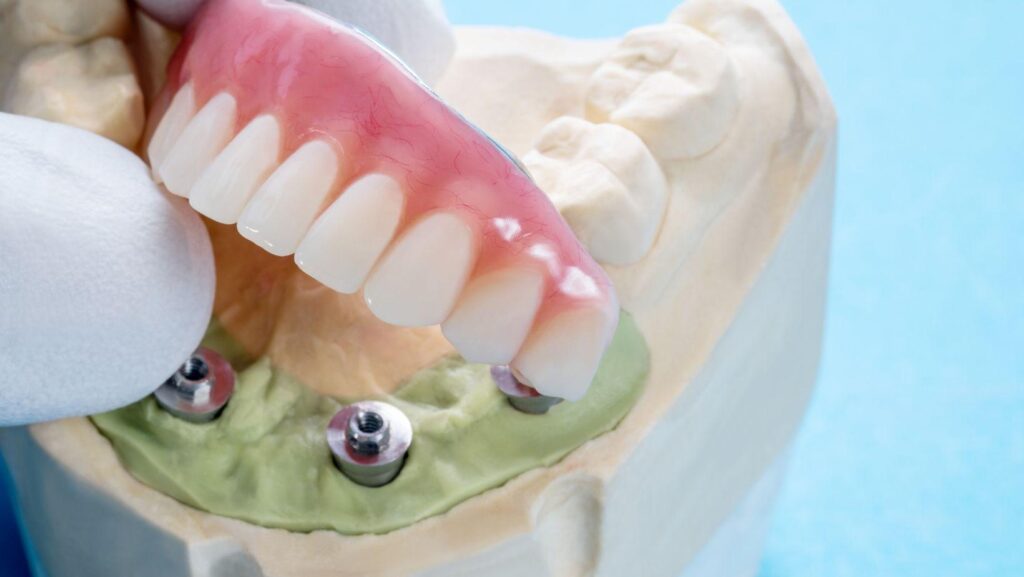
If you’re missing several teeth, dentists might use implant-supported bridges or full-arch prostheses (like All-on-4) that screw into multiple implants. This gives you near-tooth stability and preserves chewing force.
Conventional dentures rely on suction, adhesive, or clasps to stay put. Lower dentures tend to shift more, since the jawbone is narrower and moves.
Implant-supported overdentures can snap or clip onto implants for better retention, but you’ll still need to maintain attachments like O-rings or bars.
Aesthetic Outcomes
An implant crown sits where your natural tooth would, and the emergence profile usually blends well with other teeth. Because implants keep bone height, they help preserve your facial contours and gum shape, reducing the risk of a sunken look as years pass.
Dentures can look very natural at first, especially if custom-made with good shading and tooth arrangement. But as bone and gum shape change, the fit and appearance may shift. Remakes or relines can restore looks, but they won’t stop the bone loss that slowly changes your facial support.
Longevity and Durability Factors
Implants and dentures last very different lengths of time. Implants offer much more permanence, but they depend on successful surgery and bone health. Dentures wear out faster and need more routine maintenance, though they’re cheaper at first and easier to repair.
Expected Lifespan of Dental Implants
A titanium implant in healthy bone can last 20–30 years, sometimes even longer if you take care of it. The visible crown on top usually needs replacing sooner—every 10–15 years or so—because of normal wear, chipping, or changes in appearance.
Implant success depends on good surgical placement, quality parts, and regular checkups. Smoking, uncontrolled diabetes, teeth grinding, and poor oral hygiene can all raise the risk of failure and shorten lifespan. Regular dental visits and cleanings help your implant last.
Expected Lifespan of Dentures
Removable full or partial dentures tend to last 5–7 years before you’ll need a reline, adjustment, or new set. That’s because of wear and changes in your jaw and gums.
Acrylic teeth wear down, and the base can crack or discolor.
Implant-supported dentures last longer than standard removable ones, but their lifespan still depends on the health of the implants and prosthetic parts.
Expect ongoing maintenance—relines, rebasing, or replacing teeth—and new prostheses when fit or function drops off. More frequent visits and lab work come with the territory.
Common Causes of Wear or Replacement
Implants usually need attention because of infection around the implant (peri-implantitis), mechanical failure of the abutment or crown, or bone loss.
Plaque buildup can cause peri-implantitis, which might loosen or even cost you the implant if you ignore it.
Dentures often need replacing because your jaw shape changes, the acrylic or teeth wear down, or you get a bad fit with sore spots.
Diet, bite force, and how long you wear dentures each day all affect wear. It helps to keep track of repairs and watch for looseness, pain, or chewing problems.
Role of Bone Health and Oral Hygiene
Bone quantity and quality decide whether an implant can fuse and stay stable. If you’ve lost bone, you might need grafting or a sinus lift first. Not enough bone raises the risk of implant failure a lot.
Oral hygiene matters for both options. For implants, you’ve got to keep plaque away to avoid infection. For dentures, daily cleaning prevents gum problems, infections, and odors.
Regular dental visits let your dentist check bone levels, fit, and do maintenance to help things last.
Influences on Lifespan and Maintenance Needs
How long implants and dentures last really depends on your hygiene, regular dental care, overall health, and habits. Costs, how often you need replacements, and risk of problems all tie back to these factors.
Daily Care Requirements
Brush twice a day and floss around implants using floss, interdental brushes, or a water flosser. You want to keep plaque away from the gum-implant area.
For dentures, take them out at night, clean every surface with a denture brush and nonabrasive cleanser, and soak them so they don’t warp or build up biofilm.
People with a history of gum disease should get professional cleanings every 3–6 months for implants. Otherwise, every 6 months is fine.
Denture wearers still need oral exams to check fit, tissue health, and for things like ulcers or oral cancer. Swap out toothbrushes or brushes every 2–3 months.
Impact of Lifestyle and Habits
Smoking cuts blood flow and slows bone healing, which raises the risk of implant failure. Quitting before and after surgery really helps.
Heavy drinking and uncontrolled diabetes also hurt healing and raise infection risk for implants. They can speed up tissue changes that mess with denture fit, too.
Diet makes a difference. Chewing hard foods or using teeth as tools can break implant crowns or denture bases.
Rapid weight loss or bone loss from long-term denture use changes jaw shape, so you might need relines or new dentures.
Staying healthy and active supports bone maintenance around implants.
Signs of Failure or Complications
If you notice pain, a loose implant crown, gum swelling, or pus, you might have peri-implantitis or a loose implant. Get to your dentist right away.
For dentures, pain, sore spots, slipping, or visible cracks or worn teeth mean you probably need a reline, repair, or replacement.
Watch for changes in your bite, new food getting trapped, or exposed metal on implant crowns. Catching problems early saves bone and tissue and usually means easier fixes. Don’t wait to call your dentist if you spot these issues.
Long-Term Outcomes and Quality of Life Implications
Implants usually give you more stable oral function and last longer, while dentures need more frequent replacement or relining and can affect chewing and speech. Costs, daily performance, and satisfaction all differ quite a bit.
Cost Over Time
Dental implants cost more upfront because of surgery, materials, and imaging.
Implant components might last 15–25+ years, and the implant itself can stick around for decades if you keep up with hygiene and checkups.
Dentures are cheaper at first but need relines, repairs, and full replacements every 5–15 years, depending on wear and jawbone changes.
Over 10–20 years, those repeated costs can add up—sometimes denture savings disappear once you factor in all the maintenance. Implants spread the big initial price tag over more years.
Insurance, bone grafting, and complications like infection or prosthesis fracture can all change the long-term math.
Either way, plan for regular cleanings and possible repairs or part replacements.
Functional Performance
Implants anchor to bone and restore about 60–90% of your natural bite force, depending on how many and where they’re placed.
That means you can chew tougher foods—think raw veggies or steak—more easily.
Dentures bring back your smile and some function, but usually only restore 20–40% of normal chewing strength. Lower dentures, especially, can slip and rely on suction or soft tissue.
Speech is usually steadier with implants because they’re fixed in place. Removable dentures might shift and take time to get used to.
Implants help preserve bone and facial structure, keeping prosthesis fit better over time. Dentures, on the other hand, let bone shrink, which can mess with fit and function down the road.
Patient Satisfaction Trends
Younger and middle-aged patients usually say they're happier with implants. They mention comfort, confidence, and being able to eat a wider range of foods.
Surveys and quality-of-life studies consistently show that people with implants feel better about eating, socializing, and just how their mouths feel day to day.
Denture wearers often like the lower price and the fact that there’s no surgery. Still, they often complain about dentures slipping, sore spots, weird tastes, or having to avoid certain foods.
Hybrid options, like implant-retained overdentures, seem to bump up satisfaction a lot. These approaches can get quality-of-life scores almost as high as fixed implants.
People tend to feel happiest in the long run when their expectations are realistic from the start, they stick with maintenance, and any problems get sorted out quickly.