
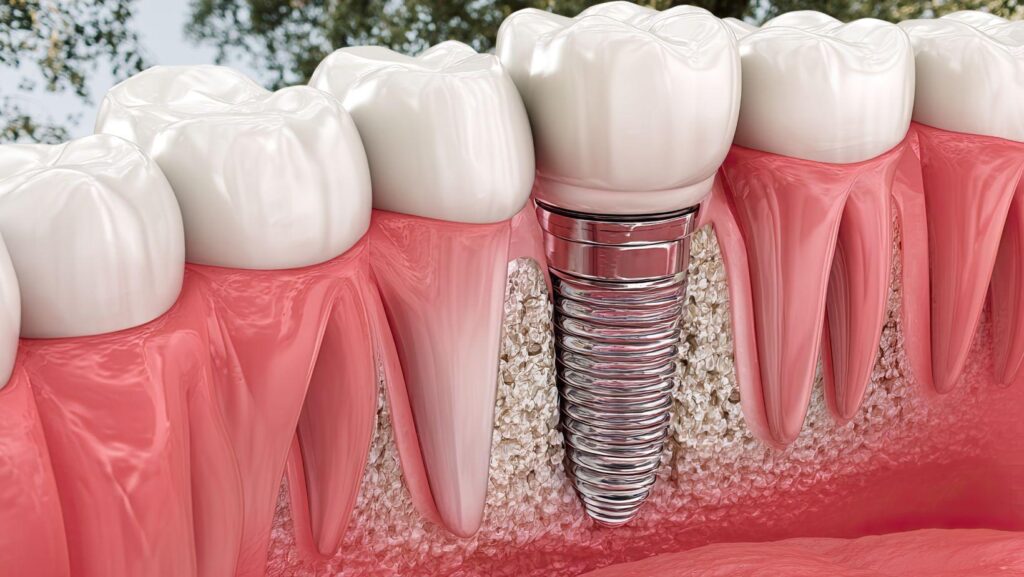
If you need to replace a full arch of teeth, you're usually staring down two main options. There's All-on-4 implants by The Smile Company in Greenville, which uses just four implants to support a whole prosthetic arch.
Traditional implants, on the other hand, replace each tooth with its own post. All-on-4 often works for people who want a faster, more affordable way to get a full arch with fewer implants, while traditional implants are for folks who want each tooth replaced individually and maximum flexibility down the road.
Let's break down how these implants get placed, who tends to qualify, and what you're signing up for in terms of cost and maintenance. You'll get some practical advice to help you decide if fewer implants with a single fixed bridge or individual implants for each tooth will actually fit your life.
Implant Structure and Procedure
Here’s how each option is built and placed, and what that means for surgery, healing, and your jaw. We’ll focus on implant count, prosthesis support, surgical approach, and where each method works best.
Surgical Techniques Compared
All-on-4 uses four implants per arch. The back implants usually get tilted about 30–45 degrees to grab onto more bone and dodge a sinus lift in the upper jaw.
Your surgeon often puts in the implants and attaches a fixed temporary bridge in one go. That means fewer surgeries overall.
Traditional implant treatment places individual implants for each missing tooth, or sometimes a few implants supporting segmental bridges. You might need staged surgeries: first, the implant placement, then a healing period for the bone to fuse (usually 3–6 months), and finally the abutment and prosthesis placement.
Bone grafting or sinus lifts show up more often with this method if you don’t have enough bone.
Recovery and Time to Function
With All-on-4, you usually get a fixed temporary prosthesis the same day. You can chew soft foods within days while the bone continues to heal around the implants.
The whole treatment moves quickly—from extraction (if needed) to provisional in days, and then a final prosthesis in 3–6 months. You’ll still need follow-up visits to check healing.
Traditional implants usually need a longer healing phase before you get your final crowns or bridges. You’ll wait 3–6 months after the implants go in before they’re loaded.
If you need grafting, that timeline can push out to 6–12 months. Some cases allow earlier loading, but that really depends on bone quality and how stable things feel at placement.
Anatomical Suitability
All-on-4 works for jaws with moderate bone loss, since those tilted back implants can grab the available bone up front and along the sides. You often skip bone grafts, but if you’ve got major vertical bone loss or tricky sinus anatomy, you may still need extra work.
Your ridge shape and bite force also affect how the prosthesis gets designed.
Traditional implants suit people with enough bone for multiple anchors, or when you want to preserve a natural look and bite. You can add bone grafts to rebuild thin spots, making this method more adaptable, but also more invasive and time-consuming when your anatomy isn’t ideal.
Ideal Candidate Profiles
You’ve got to pick the option that fits your tooth loss pattern, jaw bone, health, and how fast you want results. Cost, recovery, and maintenance all look pretty different depending on which path you take.
Criteria for All-on-4 Recipients
All-on-4 is for people needing a full-arch restoration, not just a single tooth. You probably have a bunch of failing or missing teeth across the upper or lower arch and want something fixed—and fast.
Good candidates like fewer surgical sites and a shorter total timeline. All-on-4 uses four strategically angled implants to maximize support, so it’s handy if you’ve lost some bone in the back and want to skip major grafting.
You should be in decent overall health—controlled diabetes and non-smokers usually do better. Maintenance matters: you’ll need to clean under a fixed bridge and keep up with regular dental visits.
Eligibility for Traditional Dental Implants
Traditional implants fit people replacing one or several teeth individually, or anyone wanting implant-retained crowns and bridges. If you’ve got localized tooth loss and want to keep chewing forces feeling natural, this is the route.
You’ll need enough bone at each implant site or be willing to get grafts. You should be medically stable; smoking, uncontrolled diabetes, or past jaw radiation all raise the risk of complications.
Expect a longer treatment time, since each implant needs to heal. The upside? This approach offers flexibility to replace single teeth without touching neighbors, and it’s often easier to keep clean around individual crowns.
Considerations for Bone Density and Jaw Health
Bone quantity and quality play a big role in what’s possible. Dense cortical bone in the front of the jaw makes immediate loading with All-on-4 more reliable.
Poor bone in the back can be worked around with the angled implant trick. For traditional implants, you need enough width and height at every planned site.
If not, grafting or sinus lifts might be in your future. A CBCT scan helps measure ridge height, width, and bone density.
If you’ve got advanced bone loss, systemic bone issues, or a history of bisphosphonate use, talk risks over with your surgeon. Sometimes, surgeons recommend staged grafting, alternative prosthetics, or getting medical clearance before you move ahead.
Costs, Maintenance, and Long-Term Outcomes
You’ll have to weigh higher upfront costs against possible long-term savings, and pick a maintenance routine that fits your habits. How long things last depends on bone health, prosthesis material, and how well you stick to care and recall visits.
Upfront Investment and Insurance Coverage
All-on-4 usually costs less than placing a full-arch set of individual implants. That’s because it uses only four implants per arch and often includes a fixed temporary prosthesis the same day.
Prices vary a lot by region: in the U.S., single-arch All-on-4 can run mid five-figures, while a full set of individual implants costs a lot more due to the number of implants and lab work.
Insurance rarely covers the whole bill for implant surgery or prosthetics. Most plans treat implants as major dental services or sometimes as elective procedures.
Ask your insurer about annual maximums, deductibles, and whether they’ll cover bone grafts or extractions under medical or dental benefits. Financing, dental loans, and package deals from clinics can change your out-of-pocket costs.
Longevity and Durability
Individual implants for single teeth often give you the most predictable long-term results—if your bone and oral hygiene are solid. An individually restored implant can last decades with good care.
All-on-4 prostheses are durable, but they put more functional load on fewer implants. The materials matter: acrylic teeth on a bar are easier and cheaper to repair or replace than monolithic zirconia.
Expect some routine maintenance and occasional part replacements over 10–20 years. Risks go up with poor bone, uncontrolled diabetes, heavy smoking, or gum disease around the implants.
Daily Care Requirements
If you have individual implants, your daily routine looks a lot like caring for natural teeth. Brush twice a day and floss—or grab an interdental brush—to clean around each crown.
Pay extra attention to the area where the implant meets the abutment. It's easy for biofilm to build up along the gumline, and you really don't want to risk peri-implant disease.
With All-on-4, cleaning gets a bit trickier. You'll want water flossers, proxy brushes, and superfloss to reach under and around the fixed bridge, especially in those hard-to-access pontic spots.
Some folks need more frequent professional cleanings, and sometimes the dentist has to remove the prosthesis for a deep clean, depending on how it's made. No matter which option you have, keeping up with maintenance and seeing your dental team on time is non-negotiable if you want to protect your implants and the bone around them.